
Expert Insulation Contractor in Charleston, IL - Drier Crawl Spaces, Warmer Homes
Champaign Insulationserves Charleston, IL with vapor barrier installation, crawl space moisture protection, attic insulation, and spray foam for Coles County homes. Charleston's housing stock runs from century-old two-story wood-frame homes near the downtown square to post-war ranches on the city's outer streets, and most have never had the crawl space or basement moisture addressed. We have served east-central Illinois since 2022 and reply to every estimate request within one business day.
- Vetted Local Pros
- Locally Owned and Operated
- Free Estimates
- Satisfaction Guaranteed
Services we provide in Charleston, IL
Vapor barrier installation
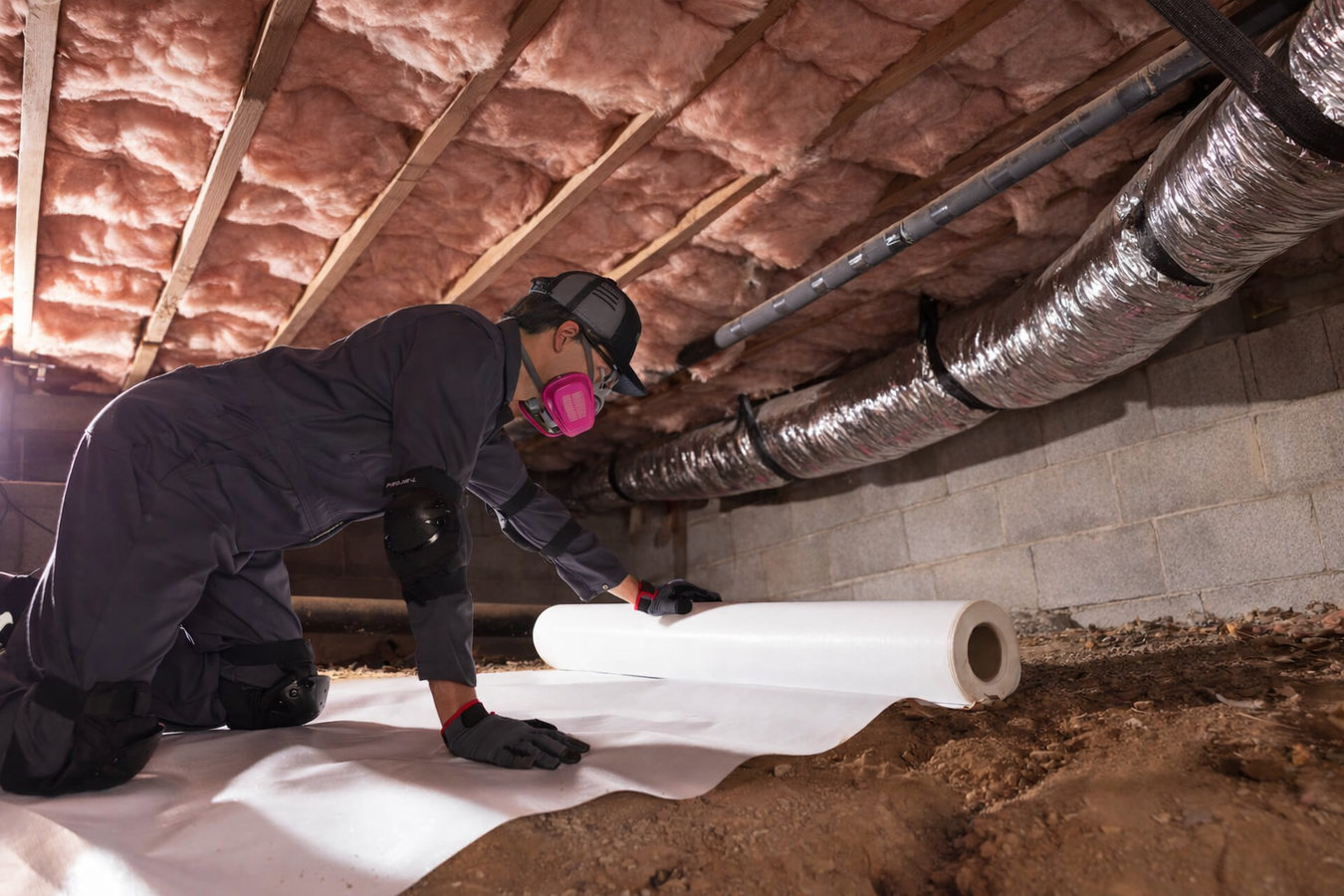
Most of Charleston's pre-1940 wood-frame homes were built on crawl space or partial basement foundations with no moisture protection on the ground surface. Coles County clay soil holds water against those foundations long after spring rains stop, and without a barrier that moisture wicks up into the floor framing and insulation above. Our vapor barrier installation seals ground moisture out at the source, protecting the floor structure and eliminating the musty odors that migrate from unprotected crawl spaces into the living area above.
Crawl space insulation
Charleston's uninsulated crawl spaces sit directly below first-floor living areas, and in a Coles County winter the cold radiates upward through the floor framing into kitchens, hallways, and bedrooms. Homes near the EIU campus in particular have often cycled through multiple owners and tenants without any crawl space attention. Insulating the floor system above the crawl space, combined with vapor barrier work, addresses both the thermal and moisture problem in one scope.
Attic insulation
The two-story wood-frame homes that line Monroe Avenue and Jackson Avenue near Charleston's downtown square commonly have attics with original compressed insulation that has never been replaced. These homes lose significant heat through the roof deck in winter, and the same attic becomes a heat sink in summer without adequate coverage. Upgrading attic insulation to current Climate Zone 5A minimums is often the single highest-return improvement available to Charleston homeowners.
Spray foam insulation
Charleston's century-old homes have irregular framing at the rim joist, around brick chimneys, and near additions and dormers where blown-in or batt insulation cannot fill gaps completely. Spray foam expands into every opening, sealing and insulating simultaneously, which makes it the preferred choice for rim joist work in Charleston's pre-war homes. It is also the most durable option for crawl space walls in homes that have had moisture issues, since it does not absorb water the way fiber insulation does.
Basement insulation
Many of Charleston's older downtown homes have full unfinished basements with poured concrete or brick foundation walls and no insulation at the rim joist or above grade. The freeze-thaw cycle in Coles County drives cold deep into the soil each winter, and an uninsulated basement rim joist transfers that cold directly into the first-floor framing. Insulating the rim joist and above-grade portion of the foundation wall meaningfully reduces heating load on the whole first floor.
Why Charleston properties need an insulation contractor who understands local conditions
Charleston was founded in 1831 and incorporated shortly after, making it one of the older cities in east-central Illinois. The neighborhoods closest to the downtown square contain homes built between 1900 and 1940, many of them two-story wood-frame or full-brick construction on crawl space or full basement foundations. These homes were built long before crawl space moisture management, rim joist insulation, or attic air sealing were standard practices. The original insulation in many of these attics has never been replaced and has compressed to a fraction of its original thickness over 80 to 100 years.
Charleston sits in Climate Zone 5A, where winter temperatures regularly drop below 20 degrees and the ground freezes 24 to 30 inches deep in a typical season. The clay-heavy soil across Coles County expands when wet and shrinks when dry, pressing against foundations throughout the spring after every heavy rain rather than draining away. Hot, humid summers with occasional storms dropping two to three inches of rain in a single event add summer moisture pressure to the same clay soils, keeping ground moisture levels elevated well into late spring. Charleston homeowners deal with moisture from both the seasonal extremes, not just winter.
Eastern Illinois University brings thousands of students and staff to Charleston each year, and the neighborhoods immediately surrounding campus have a high concentration of rental properties and older single-family homes converted to student housing. Rental properties in this part of town often have deferred maintenance that accumulates over years of tenancy, and crawl spaces in particular are rarely inspected or serviced between ownership changes. Homeowners who have recently purchased property near EIU should treat a crawl space inspection as a first step, not an afterthought.
Working in Charleston: what we know from being on the ground here
We regularly pull permits from the City of Charleston Building Department for insulation and vapor barrier projects, and we are familiar with the permit process for residential work in Coles County. The mix of housing types in Charleston is one of the most varied we encounter: pre-war brick and wood-frame homes near the downtown square, post-war ranch and split-level homes in the outer neighborhoods, and older single-family homes near EIU that have been through multiple owners and tenants. Each building type presents a different scope, and we assess moisture status and existing insulation condition during every estimate visit before recommending any work.
Charleston's geography is straightforward. The city is compact, roughly nine square miles, and most neighborhoods are within a short drive of the traditional downtown square. The Eastern Illinois University campus anchors the western side of the city, and the areas between campus and the downtown square include some of the city's oldest and most insulation-deficient residential stock. Routes 16 and 130 are the main corridors we use when traveling between Charleston and surrounding Coles County communities.
We also serve homeowners throughout the surrounding area, including Danville, the Vermilion County seat to the north with a similar stock of pre-1960 brick and wood-frame homes, and Mattoon, which shares Coles County with Charleston and sits just 10 miles to the west along Route 16 with almost identical building profiles and moisture conditions.
What to expect when you hire an insulation contractor in Charleston
Call or submit your request
Contact us by phone or through our estimate form and we will respond within one business day. We will ask about your home's age, whether you have a crawl space or basement, and any moisture issues or odors you have noticed, so we can plan the right scope for an older Coles County home.
On-site assessment and written estimate
We inspect the crawl space, rim joist, attic, and basement walls, check for moisture conditions tied to Coles County clay soil drainage, and measure existing insulation depth. The written estimate is itemized with no hidden charges, and we confirm whether moisture needs to be addressed before insulation goes in. The estimate visit is free.
Installation suited to older construction
Most vapor barrier and attic insulation jobs in Charleston are completed in one to two days. Spray foam rim joist work requires the area to be unoccupied and ventilated for a few hours after application, but homeowners can remain in the rest of the house throughout the work. We flag any framing or moisture issues we find during installation.
Walkthrough and rebate documentation
Before we leave we walk through the completed work with you and confirm whether your project qualifies for Ameren Illinois rebates or the federal Inflation Reduction Act tax credit. We provide all documentation needed to file both claims. For landlords managing multiple Charleston properties near EIU, rebates can be applied per address.
Ready to address crawl space moisture and heat loss in your Charleston home?
We serve Charleston, IL homeowners with free written estimates and honest assessments. Call us or submit the form and we will respond within one business day.
(217) 917-9089Frequently asked questions
About Charleston, IL
Charleston is the county seat of Coles County with a population of roughly 18,000 to 20,000 residents. The city was founded in 1831 and its layout reflects its age: neighborhoods nearest the traditional downtown square contain the city's oldest homes, many of them two-story wood-frame and brick construction from the early 1900s with front porches, older brick chimneys, and unfinished basements. Further from downtown, the city spreads into post-war ranch and split-level neighborhoods built in the 1950s through 1970s. A brief overview of Charleston's history and community illustrates just how long the city's core residential neighborhoods have been in place.
Eastern Illinois University is the city's largest employer and sits at the western edge of the residential grid. The presence of a large university creates a housing market split almost evenly between long-term owner-occupied homes and rental properties, sometimes on the same block. Owner-occupied homes in Charleston tend to be well maintained, but the city's below-average median home value means most homeowners focus spending on high-return practical improvements. Just south of the city along Route 130, the Lincoln Log Cabin State Historic Site preserves the farm where Abraham Lincoln's father and stepmother lived, one of the most visited historic spots in the region.
Charleston sits 10 miles east of Mattoon along Route 16. We also serve homeowners in Champaign, about 50 miles northwest via Route 130, where our insulation and vapor barrier work covers the same Climate Zone 5A freeze-thaw conditions that make moisture management a practical necessity for central Illinois homeowners.
Insulation Contractor Services Available in Charleston, IL
Spray foam insulation
High-performance spray foam that air-seals and insulates in one application.
Learn moreBlown-in insulation
Loose-fill insulation blown evenly into attics and hard-to-reach cavities.
Learn moreInsulation removal
Safe removal of old, damaged, or contaminated insulation before replacement.
Learn moreCrawl space insulation
Crawl space insulation that reduces moisture and improves floor warmth.
Learn moreAir sealing services
Air sealing that closes gaps and drafts to cut energy loss at the source.
Learn moreBasement insulation
Basement insulation that controls moisture and lowers heating and cooling costs.
Learn moreClosed-cell foam insulation
Dense closed-cell foam providing maximum R-value and a moisture barrier.
Learn moreOpen-cell foam insulation
Lightweight open-cell foam for interior walls, ceilings, and sound control.
Learn moreAttic air sealing
Attic air sealing targeting bypasses that drive up heating and cooling bills.
Learn moreCrawl space vapor barrier
Vapor barriers that prevent ground moisture from entering your crawl space.
Learn moreVapor barrier installation
Professional vapor barrier installation for crawl spaces and basements.
Learn moreRetrofit insulation
Retrofit insulation added to existing homes without major renovation work.
Learn moreCommercial insulation
Commercial insulation for offices, warehouses, and mixed-use buildings.
Learn moreAreas We Serve
Serving these cities and communities.
Serving Charleston, IL homes with vapor barriers and insulation built for Coles County clay soil and cold winters
Call Champaign Insulation today for a free written estimate. Charleston's pre-war wood-frame and brick homes are among the most consistently under-protected crawl spaces we work on in east-central Illinois, and addressing ground moisture before it reaches the floor framing protects the structure for decades.