
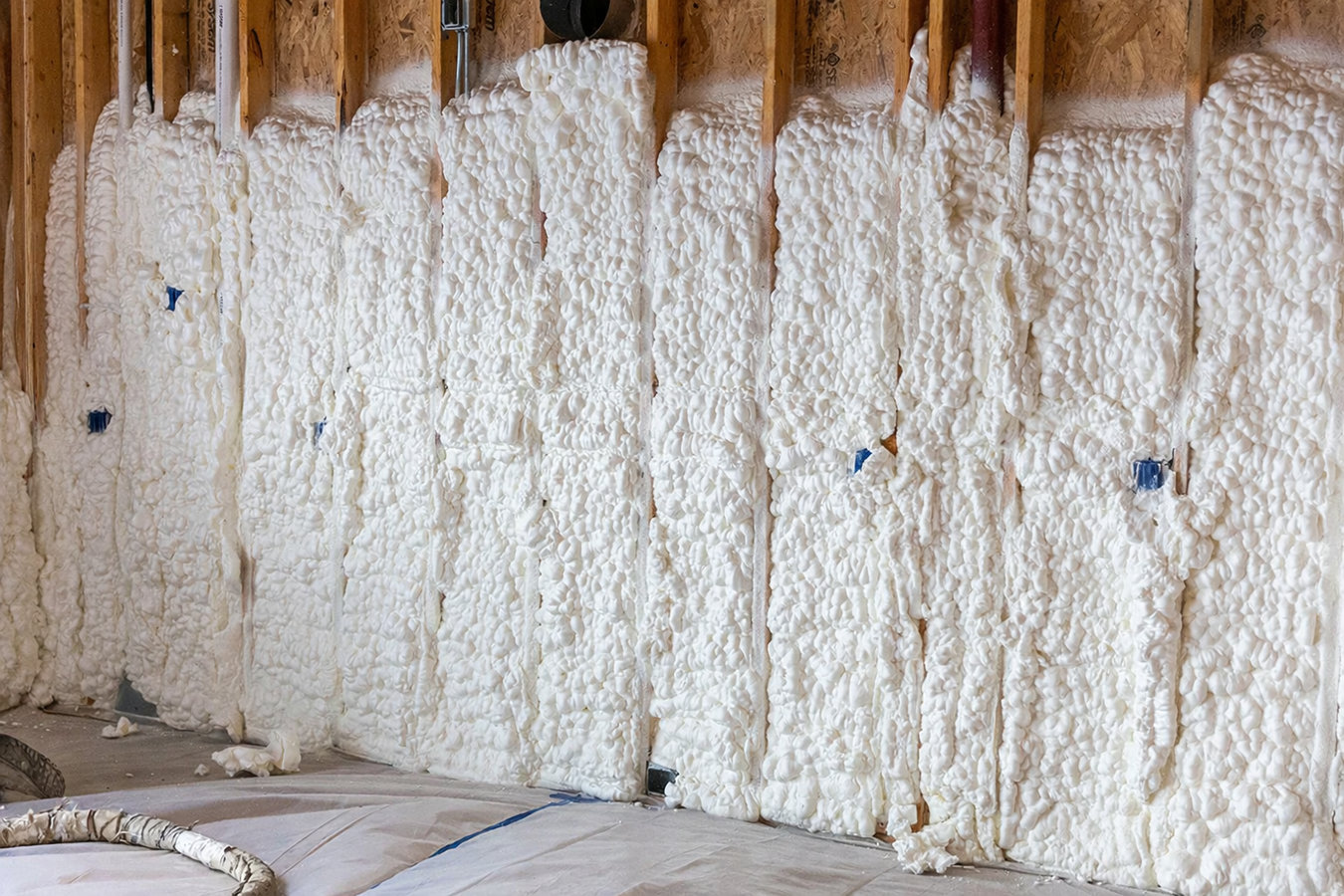
Closed-Cell Foam Insulation in Champaign IL - High R-Value and a Moisture Barrier
Closed-cell spray foam insulates, air-seals, and blocks moisture vapor in a single application - making it the strongest insulation option for Champaign crawl spaces, basements, and older walls with shallow cavities.
- Vetted Local Pros
- Locally Owned and Operated
- Free Estimates
- Satisfaction Guaranteed
What does closed-cell foam insulation do that other materials cannot?
Closed-cell foam insulation in Champaign is a two-part liquid sprayed onto walls, floors, or ceilings where it expands and hardens into a dense, rigid layer - insulating, air-sealing, and blocking moisture vapor in a single pass. Most jobs are complete in one day and require the homeowner to stay out of the treated area for a few hours afterward.
Most insulation materials slow heat from moving through a wall, but they do not stop air or moisture from passing through gaps and cracks. Closed-cell foam does both at the same time, expanding to fill every opening as it cures. That combination is particularly valuable in Champaign, where the swing between a January low and a July humidity peak puts insulation to the test in both directions every year. Homes built in Champaign before the mid-1980s were constructed under standards that allowed far less insulation than what is considered adequate today, and the foam that was installed - if any - has often settled or degraded.
Closed-cell foam is one application within a broader spray foam insulation program. If you are unsure whether closed-cell or open-cell foam fits your situation, we explain the difference during the assessment before recommending anything.
How do you know if your home needs closed-cell foam insulation?
Heating and cooling bills feel out of proportion
If your gas bill spikes sharply every January or your central air runs almost constantly through a Champaign summer, conditioned air is likely escaping and outside air is getting in. Champaign's wide seasonal temperature swings make this problem more obvious than in milder climates - a well-insulated home should hold its temperature for hours without the system cycling back on.
Drafts near outlets or exterior walls in winter
Hold your hand near an electrical outlet on an exterior wall on a cold day. If you feel a draft, air is moving through the wall cavity - and heat is moving with it. This is especially common in Champaign homes built before the 1980s, where wall insulation was minimal or has settled away from the framing over decades.
Musty smell or moisture in crawl space
Champaign's clay soil holds groundwater close to the surface, and that moisture works its way into crawl spaces and basement walls year-round. A musty smell, visible condensation, or soft spots in a wood subfloor above a crawl space are all signs that moisture is getting in - and that the space needs both air sealing and insulation that can hold up against ground moisture.
Rooms above the garage or at corners are uncomfortable
Spaces that share a wall or ceiling with an uninsulated area - a bonus room over a garage, or a bedroom at the far corner of the house - are often the first places insulation failure shows up as a comfort problem. If one room is noticeably harder to heat or cool than the rest, the insulation in that area is likely underperforming.
Closed-cell foam insulation services we provide in Champaign
We apply closed-cell spray foam in crawl spaces, basements, attics, and wall cavities throughout Champaign. The most performance-critical applications are crawl spaces and basements, where Champaign's clay soil and flat terrain create persistent moisture pressure against foundation walls. Closed-cell foam is the only common insulation material that functions as both an insulator and a moisture vapor barrier - which is why it is the right choice in those spaces rather than fiberglass, which loses effectiveness when it gets damp.
For older Champaign homes where wall cavities are shallow - many homes built in the 1950s and 1960s have cavities that are thinner than current standards - closed-cell foam delivers a meaningful R-value in less space than any other material. That makes it practical for retrofitting existing walls without gutting the interior. It also stiffens wall panels slightly once cured, which is a quiet benefit in homes where framing has loosened over decades. Closed-cell foam is closely related to but distinct from open-cell foam insulation, which is softer, less dense, and better suited to applications where moisture resistance is not the primary concern.
Every job starts with a written estimate that specifies the area to be treated, the thickness of foam to be applied, and the total cost. Thickness is what determines how the foam will actually perform - a contractor who quotes by square footage without specifying depth is not giving you a complete picture. We measure your space, explain what we recommend and why, and put it in writing before any work begins.
Crawl space closed-cell foam
The preferred choice for Champaign crawl spaces - resists moisture from clay soil, insulates, and air-seals the rim joist in a single application.
Basement wall foam application
Applied directly to concrete foundation walls, closed-cell foam handles the moisture and temperature demands of Champaign basements better than batt or board alternatives.
Attic closed-cell foam
Suitable for attic rooflines and sloped ceilings where a very thin, high-R-value layer is needed without the depth fiberglass requires.
Retrofit wall cavity foam
For older Champaign homes with shallow wall cavities - upgrades insulation performance without requiring full interior demolition.
Rim joist and gap sealing
Closes the air-leak points at the top of the foundation wall where floor framing meets concrete - one of the highest-impact single applications in older homes.
Why closed-cell foam is especially well-suited to Champaign, IL homes
Champaign sits in a climate zone where summer highs regularly reach the upper 80s and 90s with high humidity, and winter lows can drop well below zero. That is a swing of more than 100 degrees between the seasons. An insulation material that performs well only in cold weather - or only keeps heat out in summer - is not doing the full job here. Closed-cell foam's high resistance to heat flow and its ability to block air and moisture vapor make it well-suited to both extremes, which is why it comes up consistently for Champaign homeowners who want a single material that holds up year-round.
The Champaign area sits on flat glacial terrain with heavy clay soil - soil that holds water rather than draining it. For homeowners in Champaign and Urbana, that means crawl spaces and basement walls are exposed to ground moisture for more of the year than in areas with better natural drainage. Closed-cell foam is the practical answer to that specific combination of conditions - it insulates and creates a vapor barrier at the same time, which no other common insulation material does as efficiently.
A large share of the housing stock in established Champaign neighborhoods was built in the 1950s through 1970s - homes with shallow wall cavities, bare concrete basements, and original windows. Closed-cell foam is often the most practical way to upgrade those spaces without major renovation. We also serve homeowners in Rantoul and throughout Champaign County. The Spray Polyurethane Foam Alliance publishes installation standards and contractor guidance that set the baseline for what good closed-cell foam work looks like.
What happens when you call for closed-cell foam insulation in Champaign?
Call or submit a request online
We ask about your home's age, what areas you want insulated, and any specific problems you have noticed like drafts or moisture. We reply to all requests within 1 business day and can schedule a free walk-through within a few days of first contact.
On-site assessment and written estimate
We walk through the areas you want treated, take measurements, check for existing insulation, and look for moisture or anything that would affect the job. You receive a written estimate specifying what areas will be treated, the foam thickness, and the total cost. In Champaign, most projects in existing homes require a building permit - we handle pulling it before work begins.
Prepare the space the day before
Clear the work area of stored items and cover anything that should not get overspray. Plan to be away from the treated area - or out of the house - for a few hours after the foam is applied while it cures and ventilates. Your contractor confirms exactly what to expect before work begins.
Installation, re-entry, and inspection
The crew applies foam in passes, building up thickness gradually - most jobs finish in a single day. They check their work before leaving and clean up any overspray or debris. If a permit was pulled, a city inspector schedules a visit to verify the work meets local standards - your contractor coordinates that step.
Ready to upgrade your Champaign home with closed-cell foam? Get a free estimate.
We assess your space, explain whether closed-cell foam is the right fit, and give you a written quote with thickness and total cost before any work starts. No pressure.
(217) 917-9089Why Champaign homeowners call Champaign Insulation for closed-cell foam
Thickness specified in writing before every job
Foam that is sprayed too thin will not reach the performance level you are paying for - and you cannot tell from looking at it. Before work begins, we confirm in writing what thickness will be applied in each area. During the job, we check thickness as we go. You get the performance you were quoted, not a guess.
Familiar with Champaign's pre-1980 housing stock
A large share of Champaign homes were built in the 1950s through 1970s with wall cavities and basement conditions that require a contractor who knows what to expect. We have worked in these neighborhoods since 2022 and come prepared for the specific conditions common in older Champaign construction - narrow cavities, original rim joists, and crawl spaces with known moisture pressure.
Permit and inspection handled for every eligible job
The City of Champaign requires permits for most insulation work in existing homes. We pull the permit before work begins and coordinate the city inspection after - you do not have to navigate that process yourself. Permitted work protects you when you sell the home or file a future insurance claim.
Spray foam safety handled by the book
Closed-cell foam produces fumes during application that require ventilation and homeowner absence for a few hours. We follow the safety protocols published by the EPA and walk you through exactly what to expect before the crew arrives - re-entry time, ventilation steps, and what to do if you have pets. Nothing about the process should be a surprise.
The most common reason closed-cell foam jobs disappoint is foam applied too thin - a problem you cannot see after the fact without measuring. We document thickness as we go, and you can review safety guidance for spray foam application through the U.S. Environmental Protection Agency.
Frequently asked questions
Related insulation services in Champaign
Open-Cell Foam Insulation
A softer, more flexible foam option better suited to large interior cavities or applications where sound dampening matters more than moisture resistance.
Learn moreSpray Foam Insulation
The broader spray foam service covering both closed-cell and open-cell applications - the right starting point if you are not yet sure which type fits your home.
Learn moreSchedule your closed-cell foam insulation in Champaign today
We are booking jobs now - lock in your date before the cold-weather rush hits and contractor schedules fill up across Champaign County.